
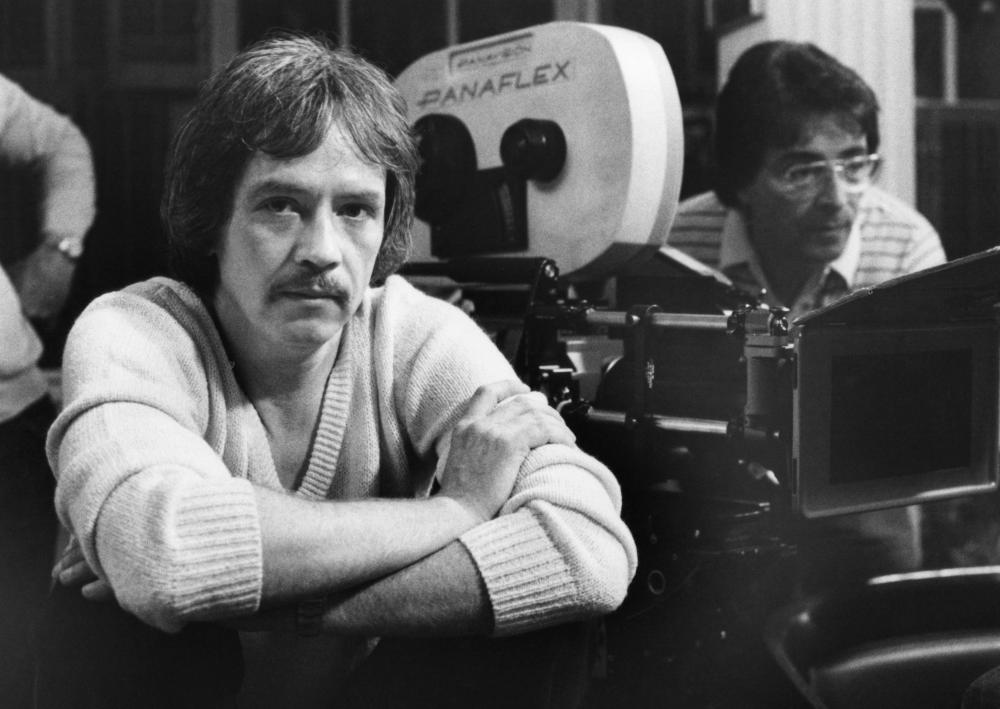
There is a line in John Carpenter’s The Thing that has no business being as relevant as it is in 2025. MacReady, alone, recording into a tape deck like a man dictating his own obituary, says it flat and quiet: “Nobody trusts anybody now, and we’re all very tired.”
He is describing twelve men in Antarctica. He is also describing the comment section of literally any news article published in the last decade. The fact that these two things are indistinguishable is, I would suggest, not a coincidence.
The Film That Was Too Honest to Be Popular
Carpenter’s masterpiece was a catastrophe on release. Critics hated it. The public, still warm from E.T.‘s bicycle silhouette, had no appetite for a film that asked whether your colleague might secretly be a gelatinous horror wearing a human face. The charge leveled most often was nihilism — as though the film were being irresponsible, somehow, for noticing that people, under pressure, become monstrous to each other.
This is a fascinating complaint. The nihilism accusation is almost always deployed by people who are comfortable enough that honesty feels like an attack. The Thing wasn’t nihilistic. It was diagnostic. There is a difference, and the difference matters enormously, though I’ll grant you that in 1982, after a decade of Watergate and Vietnam and the creeping suspicion that the institutions were rotten, Americans had developed a fairly aggressive allergy to being diagnosed.
The film has since been redeemed by history, as the good ones usually are. What was once dismissed as excessive is now recognized as precise. The horror isn’t the monster. The monster is almost incidental. The horror is the men, and what the mere possibility of the monster does to them.
The Mechanism Is the Message
Here is what The Thing understands that most social commentary fumbles: it is not particularly interested in who we other. It is interested in how. In the mechanism itself; the specific, almost involuntary lurch of the human brain toward suspicion when confronted with uncertainty about sameness.
The men at Outpost 31 don’t hate each other. They were colleagues, possibly friends, people who relied on one another for survival in one of the least hospitable environments on Earth. And then the question enters the room: is he one of us? …and everything built on trust begins to dissolve with a speed that should embarrass us as a species.
We would like to believe this is a science fiction premise. It is not. We do this constantly, with the enthusiasm of people who’ve been training their whole lives without realizing it.
We do it with accents… a particular vowel that marks you as not from here, not from the right here. We do it with postcodes. We do it with the visible markers of poverty, because we have somehow collectively decided that being poor is not merely a circumstance but a character flaw, and possibly contagious. We do it with race with a persistence and creativity that would be genuinely impressive if it weren’t so catastrophically destructive. We do it with the person asleep in the doorway on the way to your morning coffee; the one you step around rather than step toward, the one who has been so thoroughly converted from person into problem that acknowledging their humanity feels, absurdly, like a political act.
That’s the Thing logic. You don’t need a blood test for it. You just need a little distance, a little fear, and the magnificent human capacity for deciding that someone else’s suffering is, at bottom, their own fault.
The Monster Just Wants to Live. Think About That.
Here is the part of The Thing that nobody talks about at dinner parties, which is frankly why I prefer to discuss it at dinner parties, when I actually get a chance to go to one.
The alien doesn’t want to conquer. It has no ideology, no manifest destiny, no interest in your resources or your politics. It wants, in the most elemental sense possible, to survive. It mimics. It adapts. It tries, desperately and repeatedly, to pass… to become whatever the group around it needs to see in order for it to be allowed to exist.
If you are not yet uncomfortable, I’d like you to sit with that for a moment longer.
What Carpenter has built, perhaps without fully intending to (though I suspect he intended more than he let on) is an almost perfect allegory for what it costs to be OTHER in a world that has decided it doesn’t want you. The performance of normalcy under existential threat. The exhausting, constant, life-consuming work of becoming legible to people who have already decided you’re a problem. The way that no amount of mimicry is ever quite enough, because the suspicion preceded the evidence and will long outlast any reassurance you can offer.
I am not asking you to feel sympathy for a shape-shifting organism that imitated a dog and then did something with its ribcage that I would genuinely prefer not to describe. I am asking you to notice what Carpenter does with the logic of othering …how he demonstrates, with the rigor of a controlled experiment, that once you’ve decided someone might not be what they appear, you’ve already started a process that ends in fire and two survivors freezing to death in the dark, unable to extend the fundamental courtesy of trust to the only other person left.
That’s not nihilism. That’s a warning. The distinction, again, is crucial.
What Cinema Does That Nothing Else Can
This is, ultimately, why film matters. Not as entertainment, though it is that, and there’s nothing wrong with entertainment, and anyone who sneers at it has never watched the right films. But as moral technology.
The dark room does something to us. The collective silence. The fact that, for ninety minutes (OK, maybe much longer these days), we are asked to inhabit someone else’s situation with our full attention and our emotions switched on and no particular social pressure to perform the correct response. We feel things at the cinema that we haven’t yet worked out how to feel in daylight. We practice the musculature of empathy somewhere safe, and then, if the film is good enough, if it asks the right questions with enough precision and courage, we carry something out of that room with us.
The Thing is one of those films. Not because it’s comfortable (it absolutely isn’t), but because it is ruthlessly, almost unkindly honest about a tendency in human nature that we would very much prefer to chalk up to science fiction.
MacReady survives. Probably. The film’s last image isn’t victory. It’s two men in the cold, watching each other across a fire, unable to close the distance that suspicion has opened between them. That is what the logic of other produces, in the end. Not safety. Not clarity. Just an ever-contracting circle of who counts as us, until the circle is so small it can no longer sustain the people inside it.
Nobody trusts anybody. And we’re all very tired.
Yes. But exhaustion is not an excuse. And this, of all moments, is precisely when it matters that we try.
Astoria Picture Show is a nonprofit film organization built on the radical and slightly unfashionable premise that watching films together —really watching them, then talking about them honestly— makes us better at being human. Programming, membership, and upcoming events at astoriapictureshow.org.
